
Services

Concept Development
Concept development is the earliest stage of filmmaking, where the core idea for a film is born and refined. During this phase, filmmakers explore themes, genres, characters, and the overall message they want the story to communicate. Ideas may come from original inspiration, books, historical events, personal experiences, or real-life issues. The goal is to shape a compelling premise that has emotional impact, audience appeal, and creative potential. Writers and producers often create loglines, treatments, and initial story outlines to test the strength of the concept before moving forward.

Screenwriting & Story Development
Once the concept is established, the project moves into screenwriting and story development. This phase focuses on transforming the initial idea into a fully developed screenplay with structured scenes, dialogue, character arcs, and pacing. Writers may go through multiple drafts while collaborating with producers, directors, and script consultants to strengthen the story. Revisions often address narrative clarity, emotional depth, budget feasibility, and audience engagement. By the end of this phase, the screenplay should serve as a clear blueprint for production.

Financing & Packaging
Financing and packaging involve assembling the resources and creative team necessary to bring the film to life. Producers create budgets, pitch decks, business plans, and investor presentations to secure funding from studios, private investors, grants, crowdfunding, or production companies. At the same time, the film is “packaged” by attaching key talent such as directors, actors, cinematographers, or composers to increase the project’s value and marketability. Legal agreements, distribution considerations, and scheduling also begin taking shape during this stage.

Pre-Production
Pre-production is the planning phase where all logistical and creative elements are organized before cameras begin rolling. This includes casting actors, hiring crew members, scouting locations, designing sets, creating storyboards, developing shooting schedules, and preparing equipment. Department heads collaborate closely to ensure every aspect of the production is coordinated and ready for execution. Thorough pre-production helps minimize costly delays and creates a strong foundation for an efficient filming process.

Production
Production, often referred to as principal photography, is the phase where the film is actually shot. Directors guide performances, cinematographers capture visuals, and crew members manage lighting, sound, camera movement, costumes, makeup, and set operations. Every day on set is carefully scheduled to maximize efficiency while achieving the creative vision of the film. Collaboration and adaptability are essential, as unexpected challenges such as weather, technical issues, or schedule changes frequently arise during filming.
Dream Shot Studios
Dream Shot Studios in Williamsburg, VA is a creative home for faith-driven filmmakers, storytellers, churches, organizations, and production teams seeking a professional space to bring meaningful stories to life. Designed to support everything from video production and interviews to podcasts, creative content, workshops, and community gatherings, our studio provides a welcoming environment where creativity, excellence, and purpose come together. Whether you are developing a film, producing digital media, recording teaching content, or collaborating with other creatives, Dream Shot Films Studios is here to help you create with confidence and impact.

Post-Production
Post-production is where the filmed footage is assembled into the final movie. Editors organize and cut scenes together to shape the story’s pacing, emotion, and rhythm. Additional work includes color grading, visual effects, sound design, dialogue editing, Foley, music composition, and final audio mixing. This phase transforms raw footage into a polished cinematic experience that reflects the filmmaker’s vision. Test screenings and revisions may also take place before the final master is completed.

Marketing & Distribution
After the film is finished, the focus shifts to marketing and distribution. Promotional campaigns are developed using trailers, posters, websites, social media, interviews, and press coverage to build audience awareness. Distribution strategies determine how and where the film will be released, including theaters, film festivals, streaming platforms, television, or physical media. Sales agents, distributors, and publicists work together to maximize the film’s reach and commercial success.

Exhibition & Audience Engagement
Exhibition is the stage where audiences finally experience the completed film. This may occur through theatrical screenings, streaming releases, film festivals, church events, educational programs, or community showings. Audience engagement becomes important as filmmakers gather reviews, feedback, social interaction, and viewer responses that can influence future projects and brand growth. For many filmmakers, this phase also includes building lasting relationships with audiences, supporters, and industry partners for future collaborations.

Concept Development
Concept development is the earliest stage of filmmaking, where the core idea for a film is born and refined. During this phase, filmmakers explore themes, genres, characters, and the overall message they want the story to communicate. Ideas may come from original inspiration, books, historical events, personal experiences, or real-life issues. The goal is to shape a compelling premise that has emotional impact, audience appeal, and creative potential. Writers and producers often create loglines, treatments, and initial story outlines to test the strength of the concept before moving forward.
Screenwriting & Story Development
Once the concept is established, the project moves into screenwriting and story development. This phase focuses on transforming the initial idea into a fully developed screenplay with structured scenes, dialogue, character arcs, and pacing. Writers may go through multiple drafts while collaborating with producers, directors, and script consultants to strengthen the story. Revisions often address narrative clarity, emotional depth, budget feasibility, and audience engagement. By the end of this phase, the screenplay should serve as a clear blueprint for production.

Financing & Packaging
Financing and packaging involve assembling the resources and creative team necessary to bring the film to life. Producers create budgets, pitch decks, business plans, and investor presentations to secure funding from studios, private investors, grants, crowdfunding, or production companies. At the same time, the film is “packaged” by attaching key talent such as directors, actors, cinematographers, or composers to increase the project’s value and marketability. Legal agreements, distribution considerations, and scheduling also begin taking shape during this stage.

Pre-Production
Pre-production is the planning phase where all logistical and creative elements are organized before cameras begin rolling. This includes casting actors, hiring crew members, scouting locations, designing sets, creating storyboards, developing shooting schedules, and preparing equipment. Department heads collaborate closely to ensure every aspect of the production is coordinated and ready for execution. Thorough pre-production helps minimize costly delays and creates a strong foundation for an efficient filming process.
Production
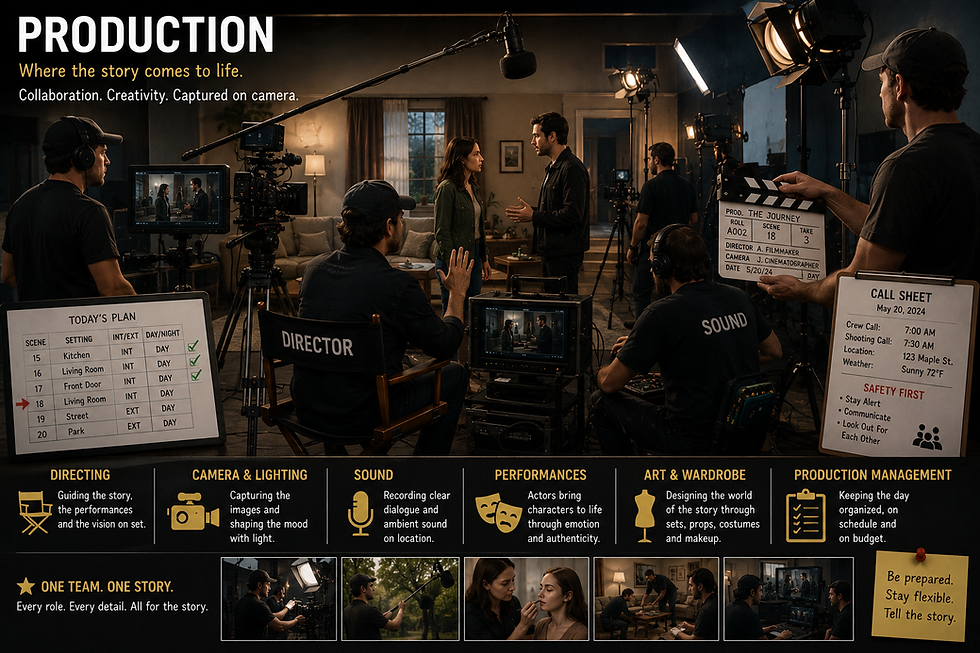
Production, often referred to as principal photography, is the phase where the film is actually shot. Directors guide performances, cinematographers capture visuals, and crew members manage lighting, sound, camera movement, costumes, makeup, and set operations. Every day on set is carefully scheduled to maximize efficiency while achieving the creative vision of the film. Collaboration and adaptability are essential, as unexpected challenges such as weather, technical issues, or schedule changes frequently arise during filming.
Dream Shot Studios
Dream Shot Studios in Williamsburg, VA is a creative home for faith-driven filmmakers, storytellers, churches, organizations, and production teams seeking a professional space to bring meaningful stories to life. Designed to support everything from video production and interviews to podcasts, creative content, workshops, and community gatherings, our studio provides a welcoming environment where creativity, excellence, and purpose come together. Whether you are developing a film, producing digital media, recording teaching content, or collaborating with other creatives, Dream Shot Films Studios is here to help you create with confidence and impact.
Post-Production
Post-production is where the filmed footage is assembled into the final movie. Editors organize and cut scenes together to shape the story’s pacing, emotion, and rhythm. Additional work includes color grading, visual effects, sound design, dialogue editing, Foley, music composition, and final audio mixing. This phase transforms raw footage into a polished cinematic experience that reflects the filmmaker’s vision. Test screenings and revisions may also take place before the final master is completed.
Marketing & Distribution
After the film is finished, the focus shifts to marketing and distribution. Promotional campaigns are developed using trailers, posters, websites, social media, interviews, and press coverage to build audience awareness. Distribution strategies determine how and where the film will be released, including theaters, film festivals, streaming platforms, television, or physical media. Sales agents, distributors, and publicists work together to maximize the film’s reach and commercial success.